A GST invoice is not just a bill — it is the document your buyer uses to claim input tax credit. If your invoice misses a mandatory field, your customer’s ITC can be denied and your own return becomes a mismatch waiting to happen. Here is exactly what Rule 46 of the CGST Rules requires.
The mandatory fields
Every tax invoice must contain:
- Supplier details — legal name, address, and GSTIN.
- Invoice number — a consecutive serial number, unique within the financial year, up to 16 characters.
- Invoice date.
- Recipient details — name, address, and GSTIN (required for registered buyers; for unregistered buyers it is mandatory when the taxable value is ₹50,000 or more).
- HSN code for goods or SAC for services.
- Description, quantity, and unit of goods or services.
- Taxable value after discounts.
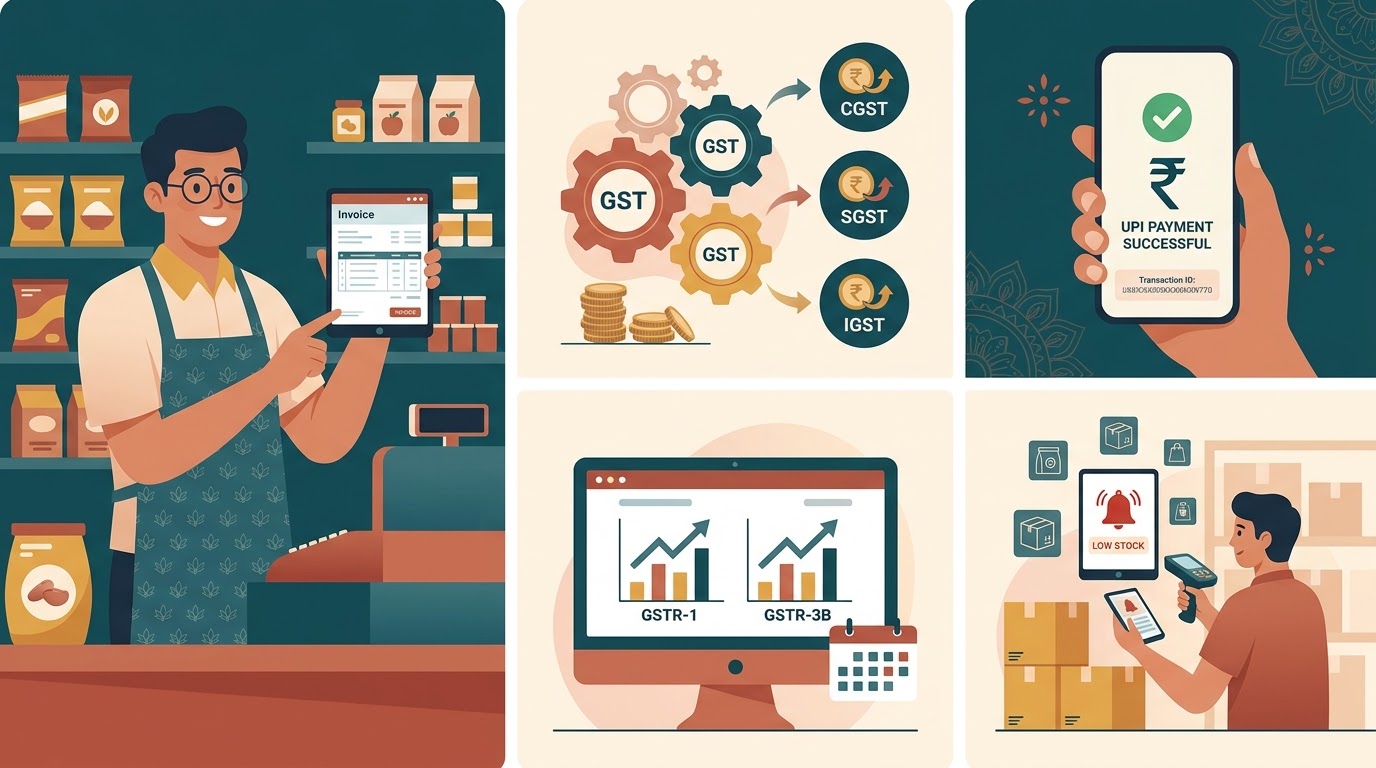
- Tax rate and amount — split into CGST + SGST for intra-state sales, or IGST for inter-state.
- Place of supply with the state name — this determines whether the sale is intra- or inter-state.
- Reverse charge declaration, if applicable.
- Signature or digital signature of the supplier or an authorized representative.
How many HSN digits do you need?
The digits required on your invoice depend on your aggregate annual turnover (AATO):
| Annual turnover | HSN digits required |
|---|---|
| Up to ₹5 crore | 4 digits (B2B invoices) |
| Above ₹5 crore | 6 digits |
The mistakes that actually cost money
- Wrong place of supply — charging CGST/SGST on an inter-state sale (or vice versa) means the tax lands in the wrong head and must be refunded and re-paid.
- Broken serial sequence — gaps or duplicate invoice numbers attract scrutiny during audits.
- Missing buyer GSTIN on a B2B invoice — the buyer cannot claim ITC, and you look careless to their accountant.
- HSN/rate mismatch — an HSN that maps to 18% invoiced at 12% creates a short-payment demand.
An invoice that misses mandatory fields is not a “tax invoice” under the rules — it is a bill that your buyer cannot use for ITC. For B2B customers, that is a reason to take their business elsewhere.
If e-invoicing applies to you
Crossed ₹5 crore aggregate turnover in any year since 2017-18? Your invoice is only valid once it carries an IRN and signed QR code from the registration portal — the fields above still apply, plus the IRN layer. See our e-invoicing rules guide.
The fast way
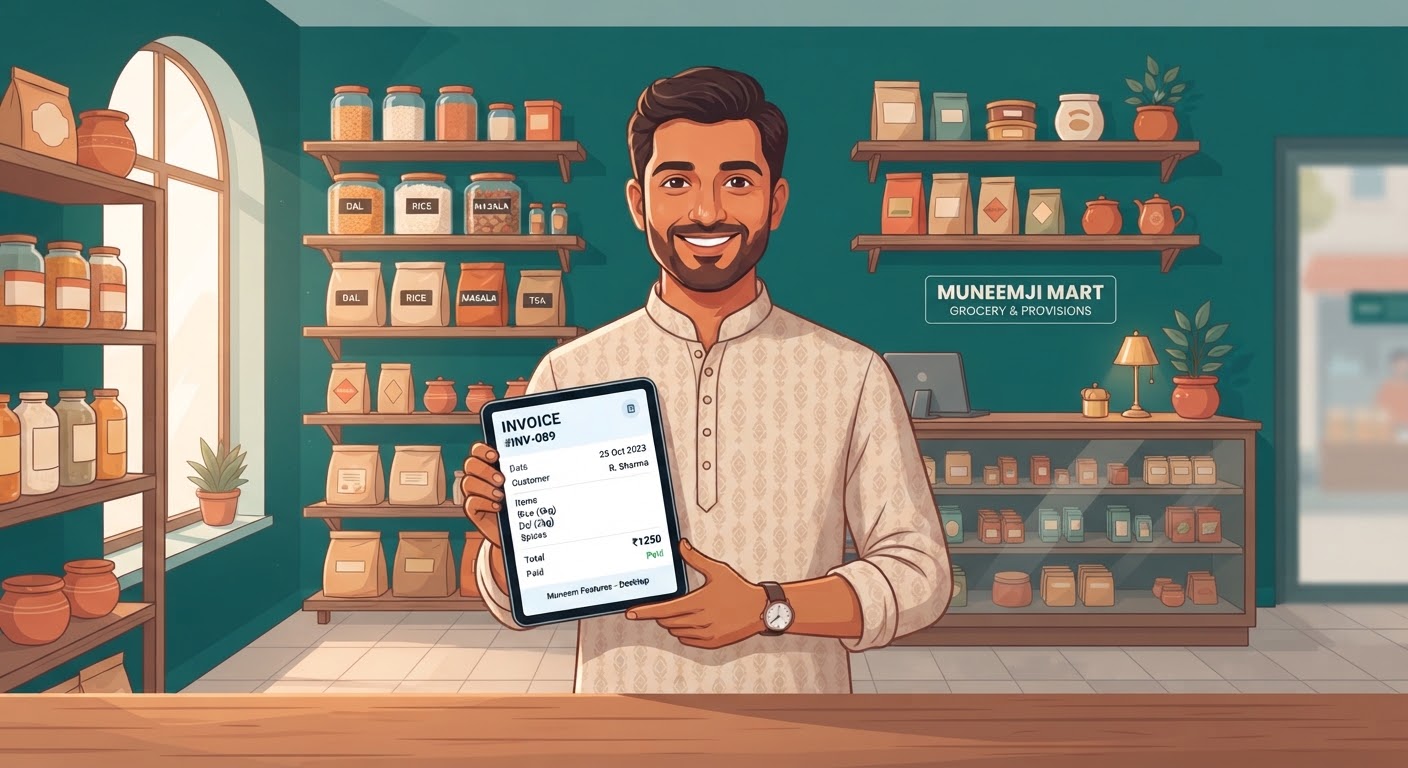
Muneem generates compliant invoices by default: sequential numbering, GSTIN validation, HSN stored per item, automatic CGST/SGST/IGST split from the place of supply, and e-invoice IRN generation when you need it. Create your first invoice free — Basic covers 100 invoices a month.