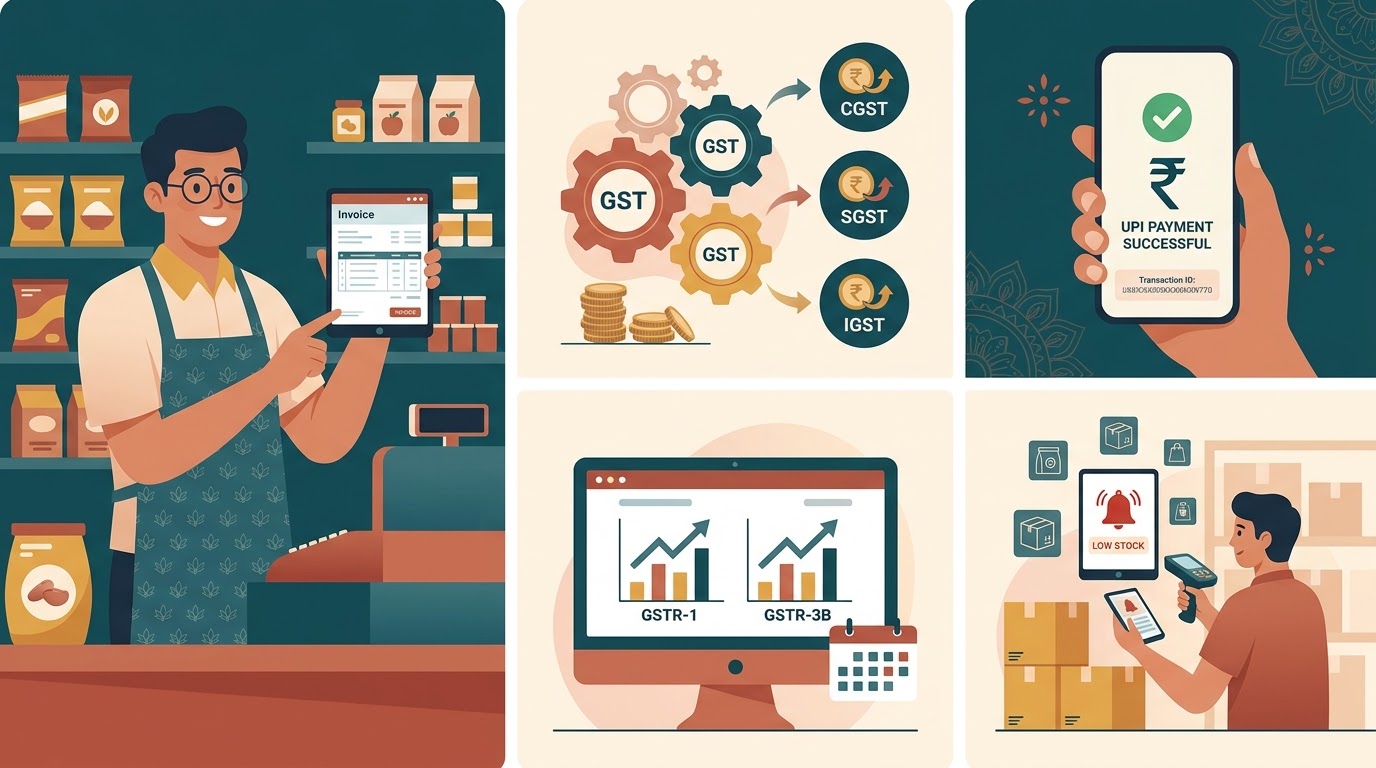
e-Invoicing is not a new tax — it is a new pipe. Instead of printing an invoice and reporting it later, you submit the invoice data to an Invoice Registration Portal (IRP) first, receive a unique Invoice Reference Number (IRN) and a signed QR code, and only then is the document a valid tax invoice.
Does it apply to you?
e-Invoicing is mandatory for B2B and export invoices if your aggregate annual turnover in any financial year since 2017-18 exceeded ₹5 crore. Turnover is aggregated across all GSTINs under one PAN — a common trap for businesses with multiple registrations.
If you crossed the threshold in FY 2022-23, e-invoicing applies to you from FY 2023-24 onwards — permanently. There is no dropping back below the threshold later.
Two important carve-outs:
- B2C invoices do not need an IRN (though a dynamic QR code for payment is separately required above certain limits).
- SEZ units, banks, insurers, NBFCs, GTA, and passenger-transport services are exempt.
What a valid e-invoice requires
- IRN generated from an IRP (such as NIC’s) before the invoice is issued.
- The signed QR code printed on the document — buyers and tax officers can scan it to verify authenticity.
- Invoice data in the prescribed INV-01 schema — GSTINs, HSN codes, tax breakup.
An invoice issued without an IRN where e-invoicing applies is not treated as a valid invoice at all — the buyer can lose ITC, and moving goods against it can attract detention and penalties under Section 122.
IRN and e-Way bill in one step
When you generate an IRN with transport details, the portal can produce the e-Way bill simultaneously — no double data entry. This is the biggest operational win for businesses shipping goods.
Getting started without the pain
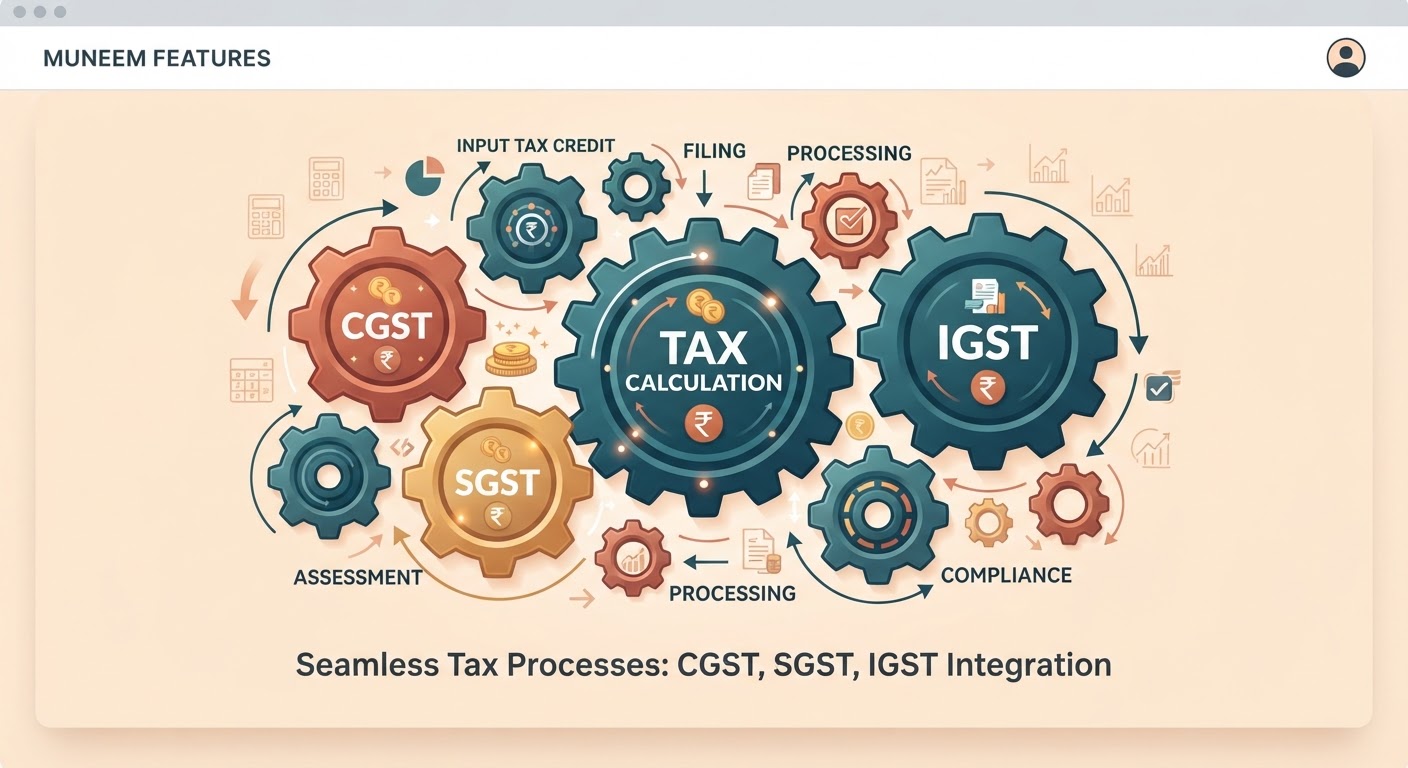
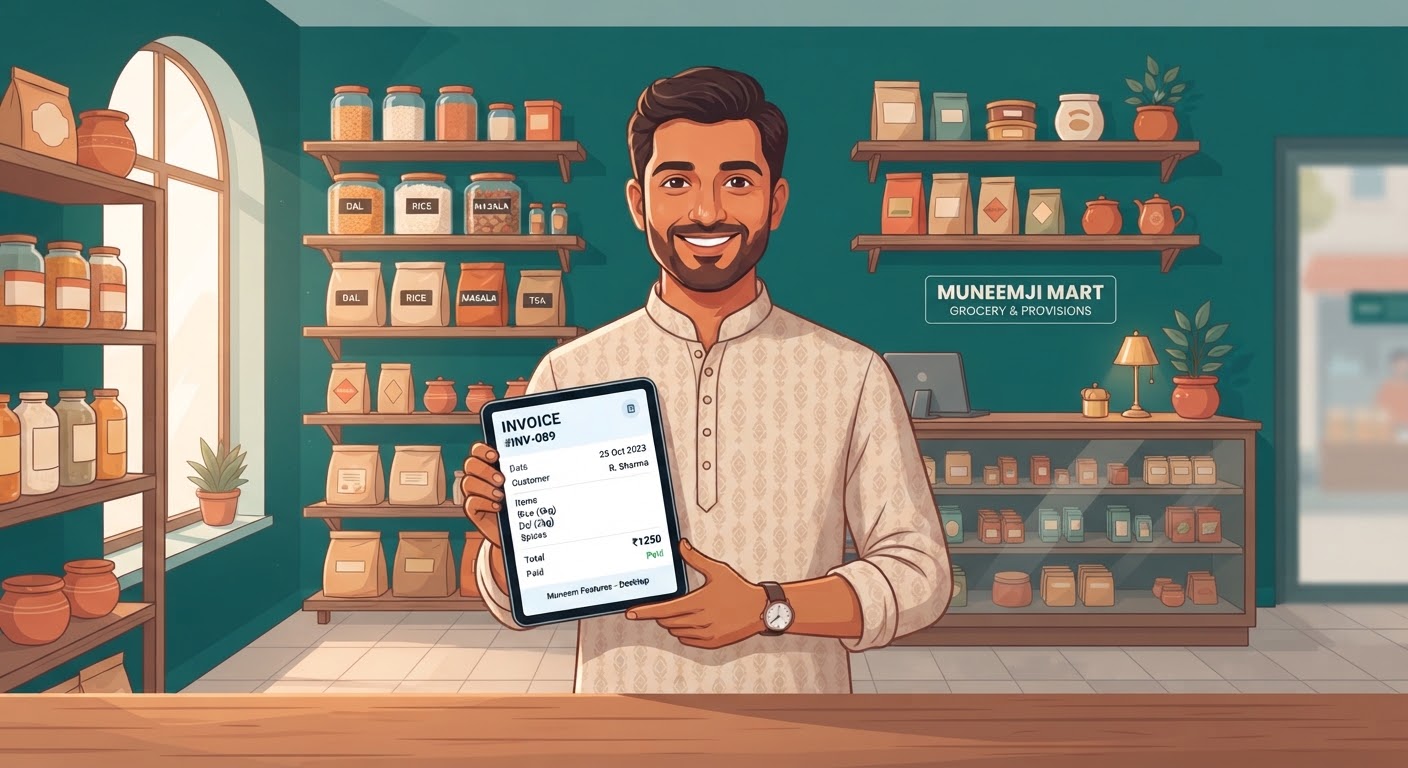
You do not need to touch the IRP portal manually. In Muneem, e-invoicing is built into the invoice screen: create the invoice, generate the IRN and QR code in one click, and get the signed PDF ready to send — with E-Way bill generation alongside it.